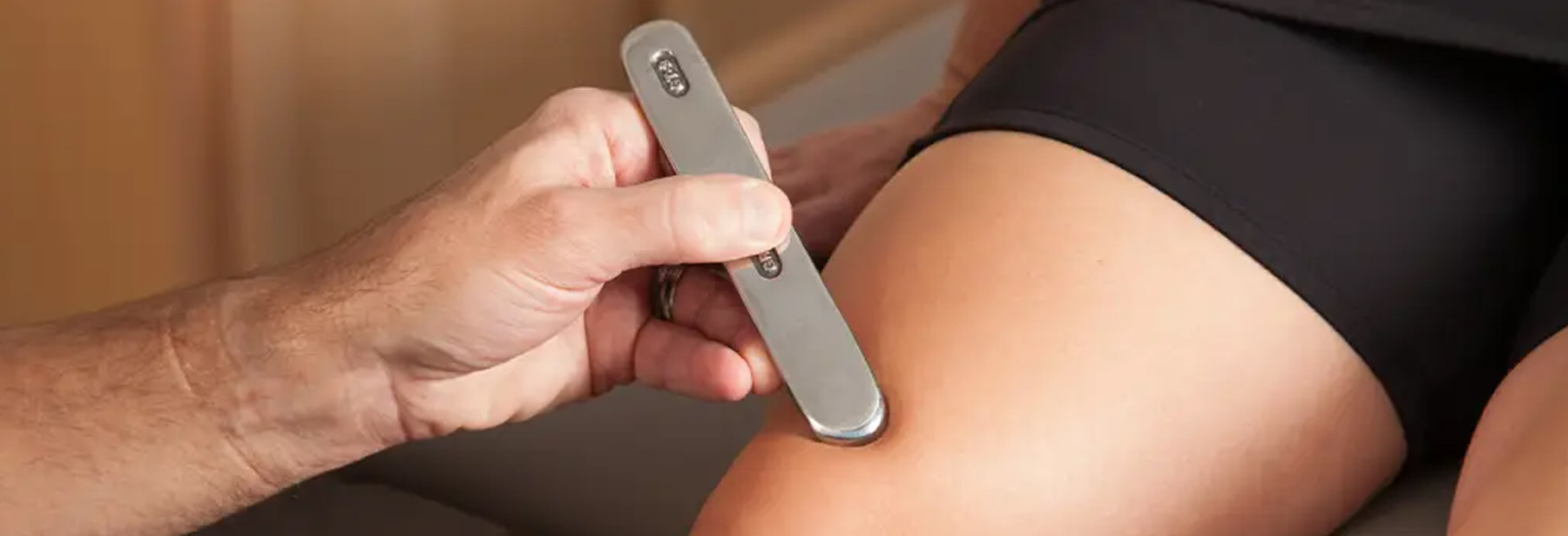
The Graston Technique is a manual therapy approach used in the treatment of soft tissue injuries and musculoskeletal disorders. It involves the use of specially designed stainless-steel instruments to perform a form of soft tissue mobilization. The instruments have unique shapes and edges that allow practitioners to detect and treat areas of fascial restrictions, scar tissue, or adhesions within muscles and connective tissues.
During a Graston Technique session, the practitioner applies the instruments to the skin with a specific amount of pressure, often in the direction of the muscle fibers. This aims to break down adhesions and promote healing by initiating the inflammatory and reparative processes. The therapy is often used to address conditions such as tendonitis, ligament injuries, and myofascial pain.
Graston Technique is typically applied by trained Physiotherapists and is often integrated into a broader treatment plan for rehabilitation and pain management.

The Graston Technique is a form of manual therapy and instrument-assisted soft tissue mobilization (IASTM) used Physical therapists to address musculoskeletal issues and facilitate tissue healing. It involves the use of specially designed stainless-steel instruments to detect and treat areas of scar tissue or adhesions in muscles, tendons, and ligaments. Here are key points about the Graston Technique:
The Graston Technique utilizes instruments with unique shapes and edges to apply controlled pressure to targeted areas of the body. These instruments are designed to enhance the therapist's ability to detect and treat soft tissue restrictions.
Break Up Scar Tissue: The instruments are used to break down and release adhesions or scar tissue that may have formed in muscles, tendons, or ligaments due to injury or overuse.
Improve Range of Motion: By addressing soft tissue restrictions, the Graston Technique aims to enhance joint mobility and overall range of motion.
Reduce Pain and Inflammation: The therapy is often employed to alleviate pain and inflammation associated with soft tissue injuries.
Muscle Strains and Sprains: The Graston Technique is commonly used for the treatment of muscle strains and sprains.
Tendonitis: It may be applied to conditions involving inflammation of tendons, such as Achilles tendonitis or tennis elbow.
Scar Tissue Formation:Post-surgical or post-injury scar tissue can be targeted to improve tissue healing and reduce adhesions.
Assessment: The practitioner first assesses the patient's condition, identifying areas of tissue restriction or scar tissue through palpation.
Instrument Application: The Graston instruments are then applied to the affected areas with specific strokes and pressures to mobilize and manipulate the soft tissues.
Reassessment: The therapist may reassess the tissues during and after treatment to monitor progress and adjust the treatment plan as needed.
Patients undergoing the Graston Technique may experience sensations such as mild discomfort or a scratching sensation as the instruments are applied. The therapy is typically not considered painful, and any discomfort is usually temporary.
The Graston Technique is often used as part of a comprehensive treatment plan that may include other manual therapies, exercises, and modalities.
Physiocare Rimbey offers a full spectrum of Physiotherapy and Rehabilitation services supported by advanced clinical expertise and evidence-based practice. To ensure a seamless patient experience, we provide direct billing to most extended health insurance providers.
Next door to Corner Bistro, 4817 51 St unit A, Rimbey, AB T0C 2J0, Canada
©2025, Physiocare Rimbey All Rights Reserved.